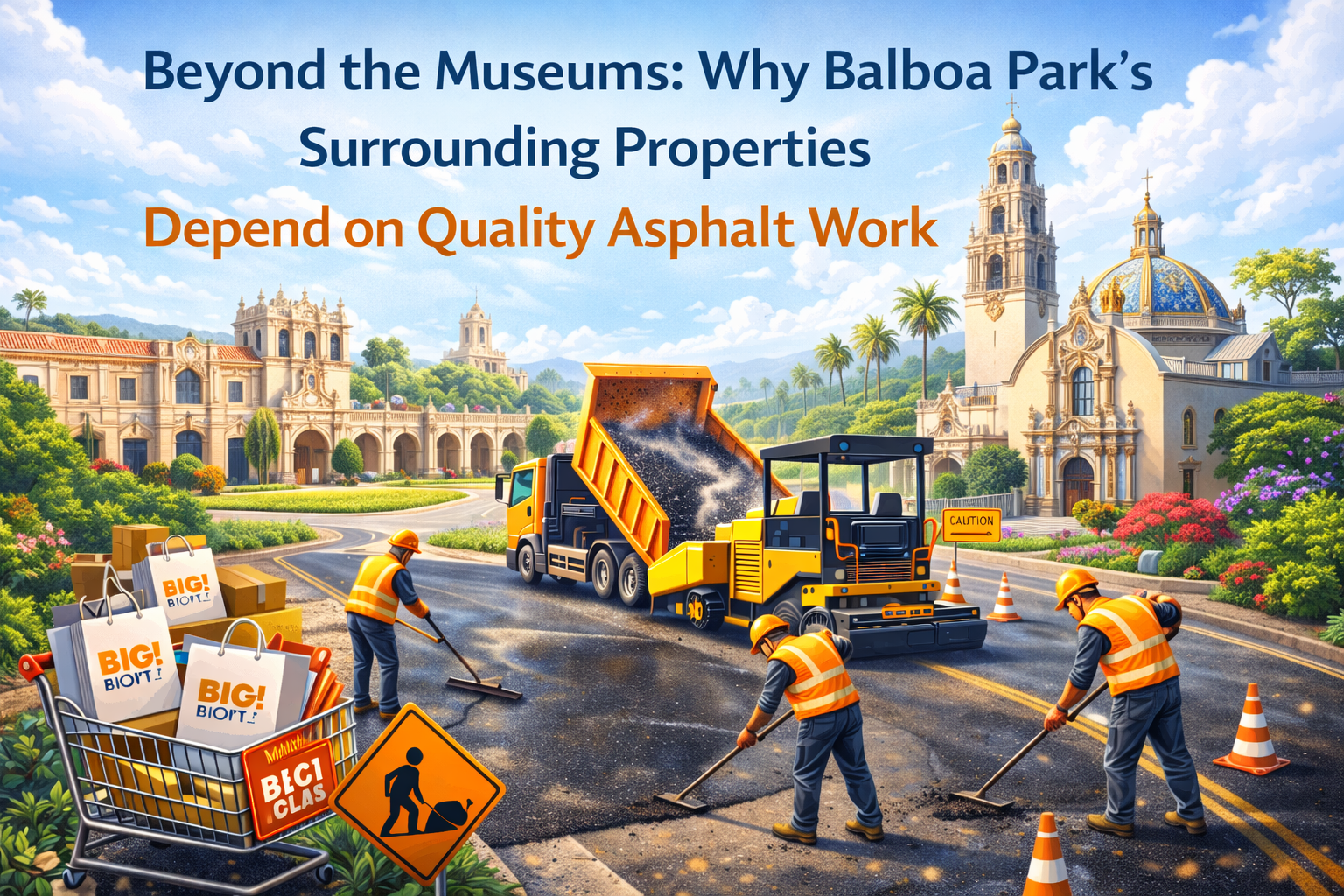
Balboa Park is San Diego’s cultural crown jewel. Spanning more than 1,200 acres in the heart of the city, it’s home to 17 museums, the world-famous San Diego Zoo, performance venues, botanical gardens, sports facilities, and miles of walking trails that draw millions of visitors every single year. The park itself is iconic — but what surrounds it is equally important to the fabric of the city.
The neighborhoods that border Balboa Park — North Park, South Park, Hillcrest, Golden Hill, University Heights, and the residential enclaves tucked right up against the park’s edges — are among San Diego’s most dynamic and rapidly appreciating communities. Property owners in these areas enjoy the rare combination of walkable urban living, proximity to one of the country’s great urban parks, and the kind of architectural character that comes from neighborhoods built across multiple eras of San Diego’s history.
But older neighborhoods with character also come with older infrastructure. And few infrastructure elements age more visibly — or cause more problems when neglected — than asphalt. If you own property near Balboa Park and you haven’t taken a hard look at the condition of your pavement lately, this guide is for you. And when you’re ready to take action, a qualified Asphalt Contractor Balboa Park can help you develop a maintenance plan that fits your property and your budget.
The Balboa Park Context: Urban Density Meets Historic Character
Paving challenges near Balboa Park are shaped by a very different set of factors than those facing beach communities on San Diego’s coastline. Here, the key variables are urban density, aging infrastructure, heavy institutional traffic, and the distinctive built environment of historic mid-city neighborhoods.
Decades of Deferred Infrastructure
Many of the residential and commercial properties surrounding Balboa Park were developed in the early-to-mid twentieth century. Driveways, parking areas, and private paved surfaces that were installed 40, 50, or even 60 years ago are still in service today — often with nothing more than the occasional patch repair to show for decades of neglect. Asphalt of this age isn’t just cosmetically tired; it’s structurally compromised, with base layers that may have been adequate for light traffic in 1965 but are entirely insufficient for today’s vehicle weights and volumes.
Tree Root Intrusion
Balboa Park and its surrounding neighborhoods are among the most heavily treed areas of San Diego. The park itself contains hundreds of mature tree species, and the residential streets of North Park, South Park, and Hillcrest are lined with established trees whose root systems extend well beyond their visible canopies. Tree root intrusion is one of the most destructive forces a paved surface can face — roots grow beneath the asphalt, gradually lifting and fracturing the surface from below in a pattern that’s impossible to address with surface repairs alone. Managing tree root damage requires a contractor who understands both the structural requirements of the repair and the need to balance pavement integrity with tree preservation.
Hillside Terrain and Drainage Complexity
Unlike the flat beach communities to the west, the neighborhoods around Balboa Park are largely hilly. Hillcrest, Golden Hill, and South Park all feature significant elevation changes that create natural drainage pathways — but also create drainage problems when pavement interrupts or redirects those natural flows. Improperly graded paving on sloped terrain can channel water toward building foundations, create erosion problems on steep driveways, or contribute to pooling in low-lying areas. Getting drainage right in these neighborhoods requires topographic awareness that generic paving contractors often lack.
Institutional and Event Traffic
Balboa Park draws approximately 10 million visitors per year. The streets and parking areas surrounding the park absorb enormous traffic volumes on weekends, during special events like the park’s various festivals, and during peak tourist seasons. Properties near major park entrances — particularly along Park Boulevard, Presidents Way, and Balboa Drive — experience the kind of sustained heavy traffic that accelerates pavement wear far beyond what a typical residential street would encounter.
Mixed-Use Development Patterns
The neighborhoods around Balboa Park include a rich mix of single-family homes, multi-unit residential buildings, small commercial corridors, cultural institutions, medical offices, and everything in between. Each property type presents different paving requirements — a medical office on Fourth Avenue in Hillcrest has very different parking lot needs than a Victorian craftsman home on a steep South Park side street. Effective asphalt work here requires a contractor versatile enough to handle the full range of project types this mixed urban environment presents.
Services That Matter Most in the Balboa Park Area
Given the specific challenges of this environment, certain asphalt services are particularly critical for properties near Balboa Park.
Root Barrier Installation and Damage Remediation
When tree roots have already damaged pavement, the repair process requires more than just patching the cracked surface. A thorough repair involves excavating the affected area, cutting back the intruding roots, installing a physical root barrier to prevent recurrence, repairing or replacing the subbase where roots have displaced it, and then repaving. Skipping any of these steps — especially the root barrier — guarantees that the problem will return within a few years. A contractor with experience in urban, tree-dense neighborhoods will know how to handle this correctly and will work sensitively around trees that are worth preserving.
Sloped Driveway Resurfacing
Steep driveways are common in Hillcrest, Golden Hill, and parts of South Park, and they present unique paving challenges. Asphalt on steep slopes must be compacted and finished with extra care to prevent surface irregularities that become slip hazards or drainage channels. The transition at the street approach — where the driveway meets the sidewalk or road — is a particularly critical zone that needs to be smoothly integrated to prevent edge cracking. Some steep driveways benefit from surface texturing or the integration of drainage channels to manage runoff safely.
Parking Lot Rehabilitation for Commercial and Institutional Properties
The commercial strips of Hillcrest and North Park, along with the various institutional properties near Balboa Park, have parking lots that often haven’t seen significant investment in many years. Rehabilitating these lots — through a combination of milling, overlay, crack repair, and re-striping — can dramatically improve both function and appearance at a fraction of the cost of full replacement. For commercial property owners, a well-maintained parking lot also reduces liability exposure and can be a meaningful factor in tenant retention.
Historic Property Considerations
Some properties in the Balboa Park area fall within designated historic districts or are individually listed on historic registers. Paving work on or adjacent to these properties may be subject to review by the City of San Diego’s Historical Resources Board or the applicable community planning group. A contractor with experience working near historic properties will understand these constraints and can help you navigate any required review processes before work begins.
ADA Compliance Upgrades
California has some of the most stringent ADA accessibility requirements in the country, and commercial and multi-unit residential property owners are responsible for ensuring that their paved surfaces — including parking areas, walkways, and access routes — meet current standards. Many properties in the Balboa Park area were built long before modern ADA requirements existed and have never been brought into compliance. A full parking lot rehabilitation project is an ideal opportunity to address these requirements, and a knowledgeable contractor can design the new layout to meet or exceed current standards.
Alley Paving and Rear Access Improvements
Like many of San Diego’s older urban neighborhoods, the areas around Balboa Park have extensive alley networks that provide rear access to properties. These alleys are often in poor condition — patched repeatedly over the years, subject to drainage problems, and frequently neglected in favor of higher-visibility street-side repairs. For property owners who rely on alley access for parking or deliveries, investing in proper alley paving can improve functionality and reduce vehicle damage caused by rough surfaces.
Asphalt and Property Value in San Diego’s Hottest Urban Neighborhoods
North Park, Hillcrest, and South Park have been among the most rapidly appreciating neighborhoods in San Diego for the past decade. The combination of walkability, proximity to Balboa Park, architectural character, and a thriving independent business culture has made these communities magnets for buyers and renters willing to pay a premium for urban living done right.
In this context, the condition of paved surfaces carries more weight than in many other markets. Buyers and tenants touring properties in these neighborhoods are sophisticated and detail-oriented — they notice things like cracked driveways, crumbling parking areas, and uneven surfaces that create trip hazards. In competitive multiple-offer situations, deferred maintenance — including pavement condition — can be used as a negotiating lever to reduce an offer price.
Conversely, a freshly paved driveway, a clean and well-striped parking area, and smooth alley access all signal that a property has been properly cared for. These signals matter to buyers and tenants alike and contribute to both the perceived and actual value of the property.
For commercial properties along the bustling corridors of University Avenue, 30th Street, and Adams Avenue, parking lot condition directly influences customer behavior. A pothole-ridden lot that damages tires or makes customers navigate carefully on foot is a deterrent — particularly for medical offices, retail businesses, and restaurants competing for customer loyalty in a market full of alternatives.
Working Around Balboa Park’s Event Calendar
One logistical consideration unique to properties near Balboa Park is the park’s extensive event calendar. The park hosts hundreds of events each year — from major festivals like the Balboa Park December Nights to ongoing programming at the various museums and performance venues. During large events, streets surrounding the park can see dramatic increases in traffic volume, and parking in the surrounding neighborhoods becomes extremely limited.
Scheduling significant asphalt work during a major park event weekend is generally a poor idea — both for the property owner and for the contractor. Coordinating around the park’s event schedule is a practical consideration that an experienced local contractor will factor into project planning without needing to be told.
For commercial properties near park entrances, this also means thinking strategically about when to close a parking lot for resurfacing work. A few days of downtime during a slow period is far preferable to losing business during a peak weekend.
What to Look for in a Contractor Near Balboa Park
The paving requirements of the Balboa Park area are genuinely different from those of San Diego’s beach communities or its suburban edges. The right contractor for this environment brings specific capabilities and knowledge.
Urban project experience is essential — working in tight spaces, managing traffic impacts, coordinating with neighbors, and navigating the permitting requirements of infill neighborhoods requires a different skill set than grading and paving a large suburban commercial lot. Experience with tree root damage and root barrier installation is a must for many properties in this area. Knowledge of historic district protocols can prevent costly mistakes on regulated properties. And familiarity with the City of San Diego’s requirements for commercial parking lots — including ADA standards and stormwater management requirements — is critical for any commercial project.
Beyond technical qualifications, look for a contractor who takes time to understand your property and your goals, provides a detailed written proposal, and communicates clearly throughout the project. In dense urban neighborhoods where every project affects neighbors and passersby, a contractor who manages the process professionally and respectfully is worth significantly more than one who simply shows up, does the work, and leaves.
When you’re ready to protect your investment and improve the functionality and appearance of your paved surfaces, reach out to a trusted Asphalt Contractor Balboa Park for a professional assessment. The right partner will give you a clear picture of your pavement’s current condition and a practical plan for keeping it in top shape for years to come.
Frequently Asked Questions (FAQs)
Q: Tree roots have cracked my driveway near Balboa Park. Can this be fixed permanently, or will the roots just come back?
A: Tree root damage can be permanently addressed, but it requires the right repair sequence. Simply patching or repaving over root-damaged pavement without addressing the roots and installing a barrier will result in the damage returning within a few years. The proper approach involves excavating the damaged area, cutting back the offending roots, installing a physical root barrier (a high-density polyethylene sheet buried vertically along the pavement edge to redirect future root growth downward rather than laterally), repairing the subbase, and repaving. When done correctly, this solution is long-lasting. A contractor experienced with tree-root issues in urban neighborhoods will know this process well.
Q: My property in Hillcrest is on a steep hill. Are there any special considerations for paving sloped driveways?
A: Absolutely. Steep driveways require careful attention to compaction — asphalt that isn’t properly compacted on a slope can shift or develop ruts under braking and acceleration loads. Drainage is also critical: the driveway needs to be graded laterally so water runs off to the sides rather than channeling straight down the slope, which can erode edges and create a slick surface. The transition at the base of the driveway, where it meets the street or alley, needs to be smooth and well-supported. Some steep driveways also benefit from exposed aggregate or a brushed finish to improve traction in wet conditions.
Q: Is my property near Balboa Park in a historic district? How would I know if paving work requires special approval?
A: San Diego has several designated historic districts, and some of the neighborhoods bordering Balboa Park — including portions of Hillcrest and Golden Hill — contain individually listed historic properties and locally designated historic districts. You can check your property’s status through the City of San Diego’s Development Services portal or by looking up your address in the city’s historic resources inventory. If your property is within a historic district or is individually listed, certain exterior changes — including significant changes to paved surfaces, particularly those visible from the street — may require review by the Historical Resources Board. A contractor experienced with historic properties in San Diego can help you understand what’s required before work begins.
Q: My commercial property near Balboa Park has a parking lot that hasn’t been resurfaced in over 15 years. What should I expect from a rehabilitation project?
A: A parking lot of that age likely needs a comprehensive approach rather than simple sealcoating. The contractor should begin with a thorough condition assessment — evaluating the extent of cracking, checking for base failure, assessing drainage performance, and reviewing ADA compliance. Depending on what that assessment finds, the project might involve crack routing and filling followed by a full overlay, selective removal and replacement of failed sections, drainage improvements, ADA upgrades to accessible stalls and pathways, and complete re-striping. A well-executed rehabilitation can bring a heavily worn lot back to like-new condition and should last another 15–20 years with proper maintenance.
Q: How much does asphalt work typically cost for properties near Balboa Park?
A: Costs vary significantly based on project scope, site conditions, and the specific work required. As a general reference, sealcoating a residential driveway might range from a few hundred to around a thousand dollars for an average-sized surface. Crack sealing is typically priced per linear foot. Full driveway replacement or overlay projects for residential properties commonly run from a few thousand to ten thousand dollars or more depending on size and complexity. Commercial parking lot rehabilitation is priced by the square foot and varies based on the extent of base work, drainage improvements, and ADA upgrades required. The most accurate way to understand costs for your specific property is to get a detailed written estimate after an in-person assessment.
Q: Can a parking lot resurfacing project be completed without closing the lot entirely?
A: In some cases, yes — by phasing the work, a contractor can keep portions of a parking lot operational while working on sections at a time. This approach takes longer and may cost somewhat more than doing the entire lot at once, but it can be a practical solution for businesses that can’t afford to lose all of their parking for several days. Discuss this option with your contractor during the planning phase to understand whether phased work makes sense for your specific lot and what the trade-offs would be.
Q: My neighbor’s tree roots are damaging my driveway. Who is responsible for the repair?
A: This is a common and sometimes contentious issue in San Diego’s urban neighborhoods. California law generally holds that a property owner is responsible for maintaining their own paved surfaces, even if damage was caused by a neighbor’s tree. However, if the tree is in the public right-of-way (a city street tree), the City of San Diego may bear some responsibility for damage its trees cause to private property — though pursuing that route typically involves a formal claim process. When the damaging tree is a neighbor’s private tree, resolution often comes through direct negotiation rather than legal action. Regardless of who ultimately pays, the repair itself needs to be done correctly — with root barrier installation — to prevent the problem from recurring.