In 2026, biometric fingerprint authentication remains the single most widely adopted, regulator-accepted, cost-effective and non-intrusive method of identity verification across Pakistan. Virtually every regulated sector now mandates or strongly prefers fingerprint-based solutions:
- Employee attendance & payroll systems (private factories, corporate offices, schools, universities)
- Secure physical access control (offices, server rooms, data centres, restricted areas)
- Banking & fintech KYC onboarding (account opening, mobile wallet activation, loan processing)
- Telecom SIM registration and mandatory re-verification (PTA & NADRA rules)
- Government facilitation centres (NADRA e-Sahulat, passport offices, excise & taxation counters)
- Healthcare patient/staff identification
- Education (staff & student attendance, exam verification)
- High-security private-sector deployments (banks, jewellery showrooms, pharmaceutical warehouses)
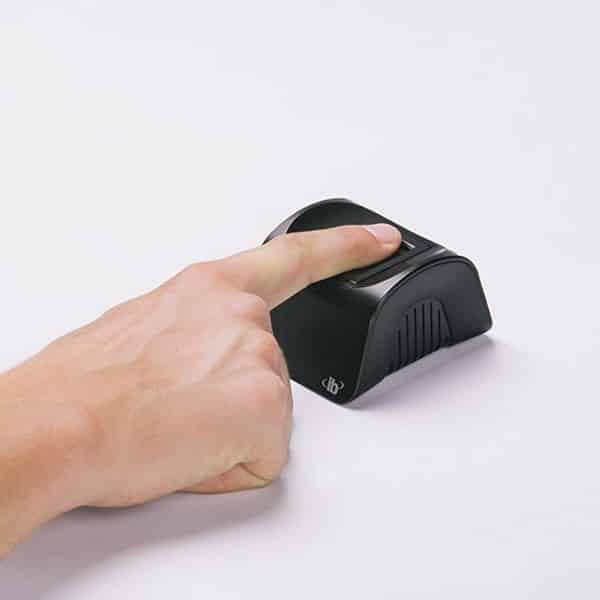
The vast majority of these deployments still rely on compact USB-connected biometric finger print scanners (also called biometric finger print devices) rather than wall-mounted terminals or multi-modal readers. These USB devices connect directly to desktops, laptops, thin clients, kiosks, or shared counters — offering true plug-and-play operation, no external power supply in most cases, minimal setup time, and seamless integration with popular attendance software, access-control platforms, custom identity applications, NADRA-linked verification systems, and banking/telecom compliance workflows.
Biometric finger print scanner and biometric finger print device prices in Pakistan in 2026 reflect a wide spectrum depending on technology (optical vs capacitive), certification level (FBI PIV / FAP), anti-spoofing strength, image quality, build durability, brand reputation, warranty period, and after-sales support network.
- Entry-level / generic USB fingerprint readers: PKR 7,500 – 12,500
- Mid-range reliable optical & capacitive scanners: PKR 12,000 – 22,000
- Certified professional-grade optical devices (FBI PIV / FAP 20–30 compliant): PKR 18,000 – 38,000+
- High-end multi-modal or wall-mounted terminals: PKR 40,000 – 90,000+
Within the professional and regulated segment, SecuGen continues to command a premium because their devices consistently meet or exceed the strict technical & certification requirements of NADRA, PTA, banking regulators, and government tenders — while performing reliably in challenging Pakistani conditions (dust, humidity, heat, sweat, high-volume shared use).
This guest post provides a realistic 2026 market overview of biometric finger print scanners and biometric finger print devices, explains what drives the large price differences, compares popular SecuGen models that are actually being used in regulated deployments, and shows why The NextGen Technologies (thenextgentechnologies.com) has become widely regarded as a top company in Pakistan’s biometric hardware supply chain.
Biometric Finger Print Scanner — High-Resolution Optical Capture for Accurate Enrollment & Matching
A biometric finger print scanner is optimized for capturing high-fidelity fingerprint images — especially important during initial enrollment, template creation, and challenging matching scenarios (dry/wet/aged/partial fingerprints, high-security requirements).
Professional-grade optical biometric finger print scanners in Pakistan deliver:
- 500 dpi or higher resolution for detailed ridge/valley capture
- Active or passive liveness detection to defeat common spoofs (latex, silicone, gelatin, 2D prints, molds)
- Scratch-resistant prism surfaces that withstand heavy daily use
- Large active sensing area — reduces positioning errors and improves enrollment success rate
- SDK support for custom integration into attendance, access control, banking KYC, telecom verification, and identity management software
Optical scanners remain the preferred choice in regulated and high-volume applications because they:
- Produce clear, high-contrast images suitable for accurate minutiae extraction
- Perform reliably with dry, wet, dirty, aged, or lightly soiled fingerprints
- Offer superior resistance to spoofing attempts
- Provide longer device lifespan in dusty/humid/hot/high-traffic environments
In Pakistan’s diverse climates and usage patterns, optical biometric finger print scanners consistently outperform many budget capacitive alternatives in enrollment success rate and long-term matching reliability.
Biometric Finger Print Device — Versatile Readers for Daily Authentication Workflows
While “scanner” emphasizes high-resolution capture, a biometric finger print device typically refers to the complete, production-ready reader optimized for immediate, daily authentication workflows — particularly 1:1 verification (matching against a known enrolled template) and 1:N identification (searching against large databases).
The most widely used biometric finger print devices in Pakistan excel in:
- Employee Time & Attendance — Prevents buddy punching, generates accurate payroll data, integrates with major attendance platforms
- Secure Access Control — Controls doors, turnstiles, server rooms, restricted areas, boom barriers
- Banking & Fintech KYC Onboarding — Supports NADRA-compliant biometric verification for account opening and mobile wallets
- Telecom SIM Registration & Re-Verification — Meets PTA and NADRA biometric standards at franchise outlets and service centres
- Education & Healthcare — Tracks student/staff attendance and verifies patient/staff identity
- Government & Public Sector — Integrates with national databases and identity verification systems
Most biometric finger print devices in Pakistan are USB-connected for plug-and-play use on desktops, laptops, kiosks, and shared counters. They are compact yet rugged enough for high-traffic environments, with low power draw and broad OS compatibility (Windows, Linux, Android OTG).
Finger Scanner Devices Prices in Pakistan — Market Reality in 2026
The price of a biometric finger print device in Pakistan today is determined by five main factors:
- Sensor Technology & Image Quality
Optical sensors (prism-based) → PKR 14,000–38,000+
Better ridge/valley detail, higher success with dry/wet/aged fingers, superior anti-spoofing
Capacitive / semiconductor sensors → PKR 7,500–18,000
Cheaper, but degrade faster and struggle with dry/wet/dirty fingers - Certification & Anti-Spoofing Strength
FBI PIV / FAP 20–30 certified (government, banking, telecom mandatory in many cases) → PKR 18,000–38,000+
Basic liveness / no certification → PKR 7,500–15,000 - Build Quality & Durability
Rugged housing, scratch-resistant prism, long MTBF → PKR 18,000–38,000+
Budget plastic housing → PKR 7,500–12,500 - Brand & After-Sales Ecosystem
International brands with local authorised distributors (warranty, spare parts, support) → PKR 18,000–38,000+
Generic / unbranded → PKR 7,500–12,000 (high risk of early failure, no support) - Volume & Channel
Retail / online marketplaces → higher markup
Authorised distributors & system integrators → often 10–25% lower + genuine warranty + support
In regulated deployments (NADRA-linked, banking KYC, PTA telecom, government tenders), buyers almost always choose FBI PIV / FAP-certified optical devices in the PKR 18,000–38,000 range. In non-regulated SME & mid-market attendance systems, mid-range optical or good capacitive devices (PKR 12,000–22,000) are most common.
Secugen Devices Prices in Pakistan — Why They Remain the Professional Benchmark
SecuGen has maintained a very strong position in Pakistan’s professional and regulated segment for more than a decade. Their optical sensors (especially the Hamster series) are still among the most frequently specified devices in NADRA-linked projects, banking KYC counters, telecom franchise biometric verification, government facilitation centres, and high-security corporate environments.
Current typical SecuGen street prices in Pakistan (mid-2026, authorised channel):
- Hamster Pro 20 / HU20 (FBI PIV & FAP 20 certified, most popular professional model) → PKR 14,000 – 19,500 (depending on distributor & volume)
- Hamster Plus / HSDU03P (older model, still very widely used) → PKR 16,500 – 21,500
- Hamster Pro 30 / HU30 (higher-end FAP 30 level) → PKR 22,000 – 28,000+
- SecuGen iD FDU03 / FDU04 (embedded module versions) → PKR 18,000 – 26,000
Why SecuGen devices command a premium over generic optical or capacitive readers:
- Consistently high image quality even with difficult fingers (dry, wet, aged, lightly soiled)
- Very strong passive liveness & anti-spoofing performance
- FBI PIV & FAP certification accepted by NADRA, PTA, SBP, and most government tenders
- Long lifespan (high MTBF) in dusty/humid/hot/high-volume environments
- Genuine local warranty & support through authorised distributors
- Proven track record — many deployments running 8–10+ years without failure
Why The NextGen Technologies Stands Out as a Top Company
The NextGen Technologies (thenextgentechnologies.com) has become widely recognised as a top company for biometric finger print scanners and biometric finger print devices in Pakistan because of the following combination of strengths:
- Authorised SecuGen Distribution — 100% genuine devices with full manufacturer warranty (no grey-market or refurbished risk)
- Transparent & Competitive Pricing — Frequently matches or beats large online marketplaces while guaranteeing authenticity
- Deep Integration Expertise — Proven ability to integrate SecuGen readers with ZKTeco, eSSL, Realand, Anviz, custom attendance software, NADRA-linked verification systems, banking KYC platforms, telecom SIM registration software, and major ERP/HRIS systems
- Nationwide Deployment & Support — Experienced teams in major cities, rapid on-site service, preventive maintenance contracts, fast spare-parts availability
- Regulatory & Environmental Knowledge — Devices pre-configured/tested for Pakistani conditions (dust, humidity, heat, power fluctuations) and compliance needs (NADRA SDK integration, PTA standards, banking KYC rules)
- Broad Biometric Portfolio — Standalone USB scanners, wall-mounted terminals, multi-modal readers (fingerprint + card), full attendance & access ecosystems
- Proven Track Record — Long-term partnerships with banks, factories, schools, hospitals, corporate offices, government-linked projects, telecom franchises, and security companies
Clients choose The NextGen Technologies because they understand that in biometric projects “cheap today = expensive tomorrow” — early failures, integration issues, compliance rejection, or lack of support can cost far more than the small price difference between a genuine SecuGen device and a generic alternative.
Conclusion
Biometric finger print scanners and biometric finger print devices remain the highest-ROI, most regulator-accepted tools for secure identity verification in Pakistan — simple to deploy, cost-effective, and highly reliable when chosen correctly.
In a market shaped by compliance requirements, security needs, and operational efficiency, selecting the right device and a dependable supplier is critical. The NextGen Technologies (thenextgentechnologies.com) leads as a top company by combining genuine SecuGen hardware, competitive pricing, deep integration expertise, regulatory knowledge, and responsive nationwide support — ensuring your biometric project delivers long-term performance instead of short-term savings followed by expensive problems.
Whether you are equipping a single branch counter or rolling out hundreds of readers across a national network, partnering with The NextGen Technologies gives you the quality, compliance, and peace of mind needed for success.
FAQs
- What is the typical price range for biometric finger print scanners and devices in Pakistan in 2026?
Entry-level/generic readers cost PKR 7,500–12,500; mid-range reliable optical/capacitive scanners PKR 12,000–22,000; certified professional-grade devices (FBI PIV/FAP) usually PKR 18,000–38,000+. - What are the current SecuGen Hamster Pro 20 prices in Pakistan?
The Hamster Pro 20 (HU20) generally ranges PKR 14,000–19,500 through authorised channels; prices can vary slightly depending on distributor, volume, and current stock situation. - Why do SecuGen devices cost more than generic fingerprint scanners?
They provide FBI PIV/FAP certification, superior image quality, better anti-spoofing & liveness detection, rugged optical sensors, longer lifespan, and genuine local warranty/support — requirements for regulated sectors (NADRA, PTA, banking). - Why choose The NextGen Technologies for biometric finger print devices in Pakistan?
As a top company, they are an authorised SecuGen distributor offering genuine devices with full warranty, competitive pricing, expert integration support, nationwide deployment & maintenance, and proven experience across regulated and enterprise projects. - How can I purchase a SecuGen Hamster Pro 20 or get technical support?
Visit thenextgentechnologies.com to check current models & pricing, request quotations, arrange live demos, or schedule consultations — their team provides fast delivery, integration guidance, and ongoing support across Pakistan.